
Against the Qualitative-Quantitative Divide
How relationalism dissolves the hard problem of consciousness, and restores meaning to the world

Since the seventeenth century, we have inherited the belief that the objective world is purely quantitative, while our subjective minds are the source and home of what we call “qualitative” — the world of colour, beauty, value, and so on. As Alfred North Whitehead put it,
The poets are entirely mistaken. They should address their lyrics to themselves, and should turn them into odes of self-congratulation on the excellency of the human mind. Nature is a dull affair, soundless, scentless, colourless; merely the hurrying of material, endlessly, meaninglessly. However you disguise it, this is the practical outcome of the characteristic scientific philosophy which closed the seventeenth century.
— Science and the Modern World, p71
It is from this division of reality into quantitative vs qualitative that we get the “hard problem of consciousness”: How can a purely quantitative 3rd-person reality give rise to our qualitative 1st-person experiences? I dealt with the 3rd-person vs 1st-person aspect of the problem in a previous post. Now I want to deal with the quantitative vs qualitative aspect of the problem, showing that there is no essential divide between the two.
A World Without Colour
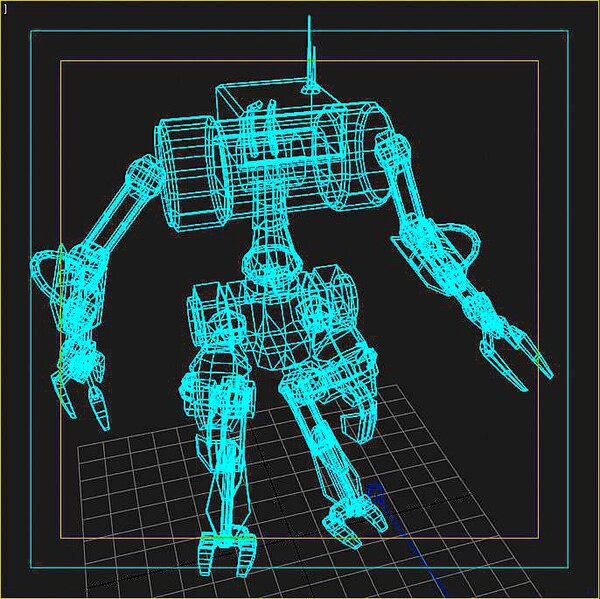
Years ago, while under the sway of the qualitative-quantitative distinction, I was thinking about consciousness and tried to imagine what it would be like to experience the world purely quantitatively, removing all qualitative aspects. Initially I imagined a “wireframe” universe, and then a greyscale universe. But these both fail — any image would require some colour, and even greys, blacks, and whites must be just as qualitative as any other colour. And even if I could imagine shapes without specified colours1, wouldn’t the very fact that I am experiencing it prove it has some phenomenal quality?
Next, I thought to try imagining just a simple mathematical concept — something purely quantitative — and see if I could have an experience of it without any mental illustration, without any “qualia” colouring it in. I took the number three as my example, and found that I can in fact experience three-ness on its own. I recommend trying this for yourself: attempt to conceive and experience three-ness without imagining any particular set of three things (you might find it helpful to start with three of something, then try switching and then removing the things). Moreover, I found that my experience of three-ness had its own particular “character” and “feeling” -- it was just as qualitative as “the red-ness of red” or any other supposed quale.
What is the experience of three-ness like? Well, it is ineffable! But I can also say that it is an experience of a particular structure, experienced as a whole. It contains within it various interlocking relations, experienced all together as one, in a way that is “more than the sum of its parts”.
This provided the first clue that qualities and quantities are not so different after all, and that both forms of experience are a matter of relational structure.
Mathematics and Music
While studying maths at university, I also noticed that mathematics frequently produces some of the richest qualitative experiences. Many people, including myself, frequently experience extraordinary “beauty” in mathematics. Is this beauty only in the symbolic notation or the diagrams illustrating the concepts? Certainly not! Otherwise we would expect such experiences to not require understanding the concepts, which we know they do. It is the mathematics itself that is transcendently beautiful. And since nothing can be beautiful without qualities, mathematics and its entities must therefore be qualitative too.
What is mathematics anyway? I would say mathematics is the study of possible patterns/structures of relations. Three-ness is one such relational structure. It expresses particular internal relations between its elements, as well as its relations to other numbers and concepts, e.g. three is half of six. Mathematics is fundamentally relational in this way. It does not care about the “thing-in-itself”, only about how things and concepts relate to one another.
To get a sense for how we feel structures, consider music. Music is entirely made of structures. When we listen to a low enough frequency, we can sense each separate vibration, and directly feel the link between frequency and pitch (try it for yourself here). Musical notes are related to one another by their relative proportions, e.g. each note repeats an octave higher when you double its frequency2. The various elements of music theory, such as different keys and chords, likewise constitute different structures between the notes. The rhythms too, are formed of structure and patterns across time.

That doesn’t mean we are fully aware of the exact composition of the structures we are experiencing. Most of us cannot identify the exact frequency of a sound, nor recognise the separate notes of a chord, or pick up the exact rhythm of a drum beat. We experience the structures implicitly and intuitively as wholes, and it takes training and effort to decompose them into their parts. This does not detract from the relationality of the experiences, but reaffirms it: we experience things as their relational structures, i.e. as wholes, not as the parts that make them up.
You might object that even though music is composed of all these structures, they are not sufficient to produce music. These structures are not what we are talking about when we say that a piece of music is harmonious, or harsh, or uplifting. These qualities are products of the mind. But if that’s the case, why shouldn’t we be able to remove or distort the structures without affecting the non-structural qualitative aspect? We might for example randomise the order and rhythm in which the notes are played. Yet we all know this would destroy the song and all its qualities. The qualities belong to the structure.
Now perhaps you might argue that the qualities are imputed based on the structure, but are not identical to it. But if that’s the case, the mind must somehow know which structures should be painted with which qualia. But if we can already discern which structures should be harmonious/harsh/uplifting etc, why do we need to colour it in at all? The quality has already been discerned in the structures — why is this not enough?
This is not to say that our qualitative experiences are entirely objective. Our bodies and minds actively structure the sense data we experience to make it more intelligible and useful for us. We experience the world as it exists in relation to ourselves, but it is not a mere fiction or projection.
The Colour Green
This ties back to what I’ve previously argued, that all of existence is entirely relational. Let’s now try to apply this to a classic example of “qualia”, taking the example of the colour green.
We can first of all say that green exists relative to the other colours, in a spectrum where it falls between yellow and blue. There are then further relations with other colours, such as complementarity and contrast. And further, our experience of green exists relative to our instinctual and learned associations with the colour, e.g. associating it with forests, life, growth, spring, safety, sickness, money etc. When we experience green-ness, we experience all these relations together at once, taken as a simple whole. (Mark Slight wrote a great post exploring the associations more fully for the colours red and grey.)

The green-ness of green is us being moved “green-ly”. It is that rich structural complex of relations and associations, all experienced subtly and implicitly within a single glance. And yes, this is ineffable. But that is only because of the poverty of language and the intellect. Our experience of colour belongs to a more ancient and less analytical part of the brain, with a richer, fuller, more nuanced schema. It experiences the structure of green-ness all at once as a single whole, without breaking it apart as language and intellect would require.
Meaning
What’s emerging here is that our qualitative experiences are full of meaning. Green-ness is not some arbitrary quale, like a lick of metaphysical paint, but is made of how the colour is related to other things as part of a “bigger picture”. It is semantic, i.e. meaning-based.
In fact, all things are semantic. All things are relational and nothing but their relations, and it is a thing’s relations with itself and others that constitute its meaning as well as its existence. We might consider how words gain their meanings from how they are used in relation to other things. Or how we speak of things as being “signs” of other things (e.g. dark clouds are a “sign” of rain — they “mean” it is likely to rain) based on their relations.
This is why both reality and our experiences are qualitative: because they are relational, and therefore meaningful. Things are meaningful because of, not in spite of, their mathematical, structural, relational nature.
And from this understanding of reality as essentially semantic and relational, we can understand the phenomena of “emergence”. A thing’s nature, its meaning, can be genuinely changed by entering into new relations, just as a word’s meaning can change depending on its context, or how the role played by a mechanical part may change depending on how and where it is placed. (I discussed emergence more, specifically in the context of the brain, in this post.)
Conclusion
From this, we see that the scientific philosophy of the seventeenth century was mistaken in severing the quantitative from the qualitative. It was a conceptual assumption that created intractable problems (even while it made physical science tractable for the first time). But if we undo that division, recognising quantity and quality and all of reality as relational and semantic, we can dissolve those problems. We can cut off the roots of the “hard problem” and open up new avenues for thinking philosophically and scientifically about consciousness, emergence, and the evolution of the cosmos. We can avoid both extremes: the reductionism that denies everything of meaning, and the mystification that places the realm of meaning forever beyond our understanding.
In this way, we gain a philosophy that is both profoundly scientific, excluding nothing from our potential understanding, and profoundly human, recognising the realities of our lived experience that give life its value. The poet and the scientist can reunite at last. Nature is not a dull, colourless affair, but overflows with meaning, beauty, and life. And it is glorious.
What do you think?
Does the Quantitative-Qualitative distinction hold up?
Does relationalism offer the possibility for a better scientific philosophy for the 21st Century?
Is mathematics beautiful?
Whatever you think, I’d love to hear from you in the comments!
P.S.
Thanks to Benjamin Curtis and Tina Lee Forsee for discussing this with me and prompting me to write this out! I’ve said it before and I’ll say it again, the comments sections are where the magic really happens.
P.P.S.
If you would like to support Think Strange Thoughts, please consider sharing this post or donating on my Buy Me A Coffee page :)
This might actually be possible, and even common. The difficulty may be that as soon as we ask ourselves “What colour is it?”, our imaginations might at that point colour in the shape for us, even though prior to that it had no determinate colour.
see https://en.wikipedia.org/wiki/Interval_(music) for more
You say that all things are nothing but their relations. I'm not seeing how this could possibly be true. While all things may stand in various relations to other things, I don't think everything can be defined without remainder in terms of relations. Indeed, some relations seem to supervene on intrinsic qualities. If a particular shade of green is lighter than some shades of green and darker than others, that is precisely because of what it is intrinsically.
Very interesting Joe! I need to think about this further to figure out if you have indeed solved the problem, but I very much respect the attempt here 😁 I'd say, from an idealist perspective, that mathematical descriptions of reality are theoretical abstractions from our experience. So the reason the muscial notation correlates to particular experiences is because the former is merely a description of the latter, and therefore doesn't have it's own independent "substance". Thus, there is nothing to be resolved, as reality is fundamentally made up of experience.