
How Radical Relationalism Resolves The Hard Problem(s) Of Consciousness
Why Zombies Can't Exist

In this post, I want to present my answer to the hard problems of consciousness. In my last post I argued that the hard problem of consciousness is actually two hard problems, a “Subjective Hard Problem” and a “Qualitative Hard Problem”. I now want to show how my radical relationalist metaphysics resolves them both, beginning with the subjective hard problem.
But before I offer my solution, allow me to try to state the problem as clearly and forcefully as I can.
The Subjective Hard Problem
The subjective hard problem is the question of how it is that our subjective first-person experience of reality arises from the objective third-person nature of reality itself. How do we get from the kind of neural activity a neuroscientist might describe to the first-person experience we all know so intimately? How do we get from the objective view of the brain surgeon to the first-person experience of the patient undergoing the brain surgery?1
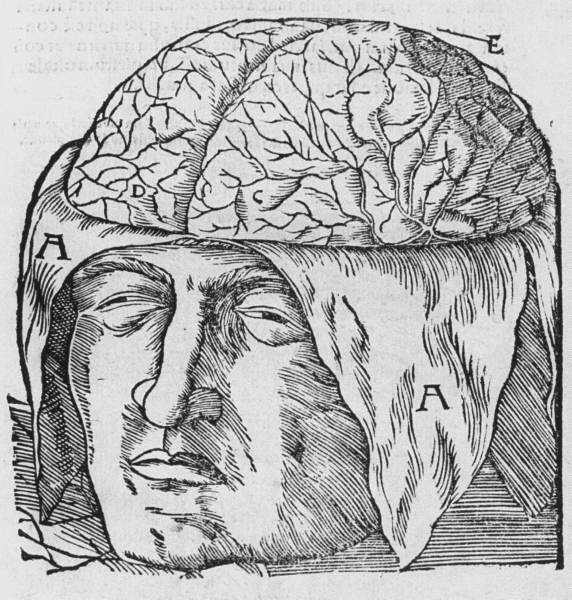
The difficulty in explaining the problem is that there is a temptation to shift to thinking of experiences in third-person terms. We can for example think of an organism’s experience as certain kinds of neural activity or information processing that allows the organism to interact with the world in certain ways. And considering that the information processing is structured in a certain way, and with certain epistemic limitations, it would necessarily be limited and subject-relative. Isn’t this enough to explain the “first-person” nature of our experiences?
The trouble with the explanation is that we have subtly changed the topic, speaking instead about certain third-person phenomena in place of the first-person experience that we were meant to explain. It is true that information processing must be relative, but why should that information processing be or produce first-person experience? Why should it not be just the information processing that we see from the third-person perspective?
To make the distinction clearer, it is helpful to use the idea of the philosophical zombie: a perfect physical copy of yourself, down to the subatomic level, who nonetheless has no first-person experience at all. Every objective physical fact about you is true for your zombie, but there are no facts about the zombie’s subjective experience at all.
Now, one good complaint about p-zombies is that they would imply consciousness is epiphenomenal (that is, it has no causal effects upon the physical world), which goes against our general belief that we respond causally to our experiences all the time (for example, when speaking about them), and poses problems for how our consciousness evolved. It might also be argued that p-zombies are begging the question by assuming that consciousness is non-functional and non-physical. I think these are both very good objections, but I also think that we still need an explanation for why we can’t have p-zombies. Why is it that the physical copy would necessarily have subjective experience?
Even if we say that the neural activity “simply is” the subjective experience, we have not explained anything. By what principle can we move from one to the other? How can they be the same thing?
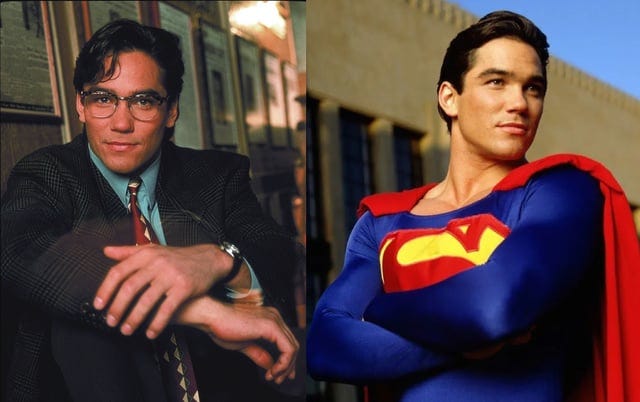
As a crude analogy, consider Clark Kent and Superman. It is not enough to say that Clark Kent “simply is” Superman: Clark is from Kansas, Superman is from Krypton; Clark is short-sighted, Superman has X-Ray vision; Clark wears his underwear under his clothes (I assume?), Superman wears his above his clothes. We need to see Clark taking his glasses off, doing his hair, and putting on the suit. We need to catch glimpses of Clark using his powers when he thinks no one is looking. We need to discover the baby spaceship in a Kansas shed. We need to be shown how they are the same, despite being obviously so different. “Simply is” explains nothing.
Another way of thinking about the problem is that our minds seem to be a “world” of their own. We each have our own subjective world, and we talk about things being “within” our minds much like how things are “within” the universe itself. How is it that the world produces all these subjective worlds within itself? Why should a world with brains be a world with more worlds, and not just a world with brains?
Note that these problems do not strictly rely upon physicalism. Even if we were, as a matter of objective fact, immaterial souls in an immaterial universe, we would still have no bridge from these objective facts of our existence as souls to our subjective experiences. To say that having first-person experience “simply is” what it is to be a soul fails for exactly the same reason that saying neural activity “simply is” experience. The equivalence has been asserted, not explained.
The Hard Problem’s Big Assumption
The hard problem relies on a background assumption so widely held, most do not even realise it is there. This is that there exists a single, third-person, objective reality, a “reality-in-itself”, existing intrinsically and independently, which is what’s “really real”.
To begin with, this reality-in-itself is taken as being a third-person physical account, in terms of atoms and neurons and the like. Then, in response to the hard problem, it is common to propose adding some special substance such as “qualia” or “souls” to our idea of ultimate reality. As I noted above, I do not believe this actually solves the subjective hard problem, since it still remains unclear how we are to move from the objective entities of this new ontology to our subjective experiences.
This is the idea that there is a single absolutely correct description of the universe, with a single true ontology, and without any limitations of perspective (it is a “view from nowhere” or a “God’s eye view”). It is a world which is at base absolute and non-relational, in which what exists “simply exists”.
We might for example believe that trees do not objectively exist, but the atoms that make them up do. Or we might believe that the trees truly and substantially exist, while the atoms that make them up only have a “potential” or “virtual” existence2. Or perhaps only the universe as a single entity exists, and all division is illusory and unreal. Or perhaps reality-in-itself is the unknowable Kantian noumena. While there’s argument about what reality-in-itself is like and how it is rightly divided, it is generally taken for granted that there is a fact of the matter, even if we could never truly know it.
As intuitive as this idea might be to us, I believe it is wrong. First of all, what does it mean to say something is “really real”? What difference does it make whether chairs are “real” or just “atoms arranged chair-wise”? If it makes no difference (which it doesn’t), what work is the word “real” actually doing here, besides attempting to police our ways of thinking and speaking?
Our common use of the word “real” is much more pragmatic: a thing is real if it makes a difference. A chair is real if you can sit on it and unreal if you cannot. The value of an item is real if you can actually sell it for so much. A body of water is real if your camels can drink from it and you can wash your feet in it.

By contrast, the metaphysical sense of “really real” seems practically defined by its uselessness. Reality-in-itself is defined precisely in contrast to “useful fictions” and “mere appearances”, which are even at times rejected as unreal because they are so useful and knowable! At the extreme, this leads us to something like Kant’s “noumena”, the “thing-in-itself” that is so real it is perfectly unknowable and irrelevant.
The Alternative: Radical Relationalism
The alternative I am putting forward is what I call “radical relationalism”. There is no non-relational existence. No reality-in-itself. No view from nowhere. No absolute ontology or fundamental reality (not even one consisting of relations — even relations are entirely relational). What there are are things existing entirely in relation to one another. To be is to be in relation. There is no “thing-in-itself”, there is only the “thing-in-relation”. As the immortal words of Gerard Manley Hopkins put it, “Whát I dó is me: for that I came.”
This gives us a non-foundationalist and pluralist view of reality. There is no one absolutely true or definitive metaphysics or ontology. But many different (and conflicting) ontologies may simultaneously be true. We do not need to say whether chairs “really” exist or not.
In that case, even the physical account of reality is not reality-in-itself, but is reality relative to the epistemic frameworks of our physical sciences. That does not mean that it is false, but only that it is not some ultimate exhaustive metaphysical truth. Atoms really exist — we can detect and manipulate them and see how they interact with the world. Similarly chairs exist, animals exist, laws exist, ideas exist, and so on. We know these things exist because they exist in relation to us. We can detect them, study them, interact with them etc.
To be clear, this is also not to say that everything is relative to our minds. For one thing, our minds are not fundamental and exist in relation to the world too, like everything else. But also, things exist not only in relation to ourselves, but to each and every other thing that exists too. The Sun, for example, exists in its relations to Mercury, Venus, Mars, and the other planets, as well as to Earth and its strange creatures.
You might be feeling some resistance because this is admittedly a radical metaphysical thesis. But I would point out that the idea of reality-in-itself is an equally radical metaphysical thesis, and (in my opinion) completely unjustified. What’s “really real” is empirically unknowable and seemingly not even well defined. But the world-in-relation is knowable precisely because it is in relation.
The world-in-relation is this world we actually know and engage with. It is the world available to us in both our daily lives and in our scientific investigations. If there is a “real” world behind it, we’re not part of it.
How This Solves The Subjective Hard Problem
Radical relationalism pulls the rug out from under the hard problem by rejecting its hidden assumption of a single “really real” description of the world, from which we must somehow derive our subjective experiences. The physical description of the world is one truthful lens, but a lens nonetheless.
As a result, we can consider multiple different relational accounts of the world to be equally real. We can consider the world relative to atoms. We can consider the world relative to cats. We can consider the world relative to trade. We can consider the world relative to our concepts of the nation state. Each of these “carve up” the world in different ways, giving different “worlds”, and yet all of them are real and are describing the same world.
These examples are relative to general schemas or “universals”, but we can also speak about how things exist in relation to particular individuals. We might for example consider the motion of the Moon relative to the position of the Earth. The Moon’s position relative to the Earth is as real as its position relative to the Sun or to the centre of the galaxy or to the fixed stars. The only position that’s not real is its “absolute” position, devoid of any reference point. Or as another example, consider a little boy calling a certain woman “mummy”. He is referring to the woman as she exists in relation to himself, within his own relational ontology. To him, she simply is mummy — that is not an accidental property of her, that is what she is to him, how she exists to him, and him to her.
There is not only a world-in-relation-to our conceptual categories such as physics, biology, economics etc, we can also speak about world-in-relation-to each particular thing. For each thing, there is a world-in-relation-to that thing, consisting of all the things in relation to that thing, as they relate to it. This is not a separate world, but another equally real description or “carving up” of the one world we share.
We might for example say that for an electron being buffeted by various forces, its world consists of those forces acting upon it, directing its course. For a single-celled organism, its world consists of its various senses and its interpretation of them, that inform its reactions to the world.
For more complex organisms the picture gets much more complex, since they can relate to the world in vastly more complex and varied ways. Animal senses grow more complex and have to be integrated with one another, as well as with concepts such as “food”, “danger”, “mother”. They also develop more ways of responding to the world, both internally through more sophisticated internal processing, and externally through increasingly sophisticated behavioural responses. The world-in-relation-to such animals is therefore much more interesting and complex. Then as animals evolve memory and imagination and advanced cognition they integrate and relate to the world through these too, including relating to themselves, giving rise to an ever more complex relational world. These determine the world-in-relation-to the animal, its structure, its ontology, its categories.
This world-in-relation-to the animal is mediated by its sensory, neural, and conceptual apparatus, as well as by various aspects of the external world. For example, light mediates our relations to visible objects, which is then further mediated by our eyes and nervous systems. This mediation is typically successful in relating the world beyond our skulls to us, although this mediation does introduce the possibility for errors and even hallucinations. The world-in-relation-to us may therefore include some entities which only exist in relation to ourselves, such as hallucinations or imaginary friends.
It is this world-in-relation-to the animal that is its subjective first-person experience of the world. It is not a separate world or a special non-physical substance. It is the world itself, as it exists in relation to the creature.3
We do not need to explain experience as something added to the world. It is not something other than the world, nor a separate inner world. It is the world-in-relation-to us. We do not need to explain some second layer of reality, because there is none. Although this goes against certain dualist intuitions, it also surprisingly validates our deeper direct realist intuitions4, that what we are experiencing really is the external world. It is not the “world-in-itself”, but it is the real world.
It also allows us to resolutely reject epiphenomenalism. Our experience is anything but epiphenomenal, but is itself our receiving the world, interpreting it, and responding to it. Our experiences inform our decisions and actions, just as they intuitively appear to.
This view also allows us to now respond to challenge posed by the zombie problem. If there were a perfect physical copy of myself in a zombie world, he would exist in all the same relations as I exist in, and therefore there would be exactly the same world-in-relation-to him as the world-in-relation-to myself. Therefore, he would have exactly the same first-person subjective experience as I have.
What the zombie argument is really doing is imposing a rule that we must limit ourselves to one particular point of view, one particular ontology (i.e. the third-person physical point of view), and not imagine the world-in-relation-to the zombie, the world from their point of view. It is mistaking two different relational perspectives on the same reality — the third-person and the first-person — for two completely separate realities. Neither is reality-in-itself. Both are relational. Both are real. The zombie problem relies on privileging one perspective as absolutely, intrinsically real.
You might be wondering, how is it that the animal exists together as a unified whole to be the subject of these relations? Why is the brain not just neurons or atoms? To that my answer is that this question is again supposing there is a single definitive “really real” ontology, to which all real entities must belong. But radical relationalism rejects this. There is no difference between things acting and relating as if they are one entity, and things really being one entity. To the extent that things function as one, they are one. And to the extent that things relate to the world as one, the world is related to those things as one too.
You might also be wondering if this doesn’t amount to a kind of panpsychism. This is in my opinion largely just a semantic question. All things do have a world-in-relation-to them. But I do not think we should attribute “consciousness” to simple entities such as rocks or electrons, since they lack the kinds of reflection and representation that characterise “consciousness” in more advanced creatures, as well as our typical use of the word. We might speak of them as “experiencing” forces5, but there is no sign that they experience themselves experiencing them.
Let’s now turn our attention to the Qualitative Hard Problem.
How This Solves The Qualitative Hard Problem
The qualitative hard problem asks, how is it that the “phenomenal” or “qualitative” properties that make up our experiences exist? How is it, for example, that the “redness of red” exists? How do we get from the colourless, painless world of fundamental physics to the colourful, painful, beautiful world of our subjective experiences?
The answer is that these qualities are part of the relative ontology/categories of the world-in-relation-to us. They are real ways in which the world exists in relation to ourselves. They are not non-causal “intrinsic properties”, as is sometimes supposed, but are instead complex relational properties, existing in how they move us, what they mean to us.
Pain, for example, is not to be understood as an arbitrary quale which we just so happen to dislike and avoid6. It is relational, tied up with our awareness of bodily damage, with it grabbing our attention, with our learning to avoid this situation in future, with our desire for the pain to stop, etc etc. These are all relations that make pain what it is, and if we subtract them all, what is left? That does not mean that pain does not exist. It exists, like everything else, as a complex of relations.
This does not mean that these qualities are unreal or illusory. They are not intrinsic properties, and they are not fundamental. But then, nothing is. Everything is relational. It is not a second class kind of existence. They are real aspects of the world-in-relation-to ourselves. They are real. Just not in the way some have imagined.
Conclusion
So there you have it. My radical relationalist solution to the hard problem of consciousness. It is, in my opinion, deeply satisfying and rather beautiful. For the small price of the (useless) notion of a “world-in-itself”, we get a far richer vision of a relational universe. A universe in which consciousness is real and plays a real causal role. A universe in which the world we experience is the real world, not a mere image. A universe which is not limited to one point of view or one definitive description, but gives itself up to a multiplicity of views. A universe which is full of colour and beauty. A universe which is empirically and rationally knowable. A universe which exists in intimate relation to ourselves.
Incredibly, patients are often conscious during brain surgeries. It is useful for the surgeons to be able to test how they are affecting the person’s mental operations as they go, and so will ask the patient various questions as they go. The brain itself does not have pain receptors, so the patient cannot directly experience the surgeon’s scalpel.
This was a part of Aristotle’s view, and a similar view has been put forward more recently in connection with IIT (see here for examples).
Or perhaps I should say “to certain regions of the creature’s brain”.
Direct realism is so intuitive it’s opponents even call it “naïve realism”. They named it for how intuitive it is to everyone!
We actually already talk in this way in physics, as this Google search shows.
Fun post and well written.
>You might also be wondering if this doesn’t amount to a kind of panpsychism. This is in my opinion largely just a semantic question. All things do have a world-in-relation-to them. But I do not think we should attribute “consciousness” to simple entities such as rocks or electrons, since they lack the kinds of reflection and representation that characterise “consciousness” in more advanced creatures, as well as our typical use of the word. We might speak of them as “experiencing” forces5, but there is no sign that they experience themselves experiencing them.
This is where the utility of the theory breaks down a little for me, but that’s likely due to a faulty reading. I’m selfishly most curious about the seeming difference between the rocks/electrons and my definitely conscious self/other seemingly conscious animals. When I think about the hard problem of consciousness, I think of it in terms of why I definitely experience things, and waterfalls seemingly don’t. You suggest that the waterfall doesn’t experience itself experiencing things, while I do, but then that’s the difference I want most to get to the bottom of. I’m stubbornly set on that being the distinction that matters when people talk about consciousness.
If all things experience things but only a handful of those things experience themselves experiencing things in some sense, that could be, but I think most of us are after the mechanism behind those exceptions when we scratch our heads over conscious experience.
As I've remarked elsewhere while discussing Thomas Nagel's _The View from Nowhere_: The real hard problem does not concern subjectivity, the view from somewhere, which for everyone is a given. The real hard problem concerns objectivity, the view from nowhere, which no one has or can possibly have. Yet so much do we take "objectivity" for granted that we are confused into thinking it's no problem at all, and we end up puzzling over exactly the wrong thing, namely how there can be subjectivity. The question for the next development in philosophy, I predict, is how there can be objectivity; and the leading minds are already on it (in their explorations of "intersubjectivity," "interspace," or "betweenness," for example).
As for the hard problem as identified by Chalmers: I've known all along that it's a problem only for the Metaphysics Formerly Known as Materialism. I feel like I'm watching patiently as, under cover of a name change, the adherents of said metaphysics gradually adjust their position, while trying to make it seem like they were right all along.
(Random thought re Footnote 1: it's interesting that brain neurons can directly experience the surgeon's scalpel, but the patient cannot.)